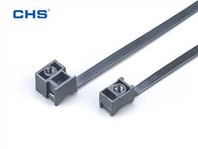
When it comes to managing and securing cables, flat cable clips play a crucial role in various industries and applications. As a supplier of high - quality flat cable clips, I often receive inquiries about their weight capacity. Understanding the weight capacity of flat cable clips is essential for ensuring the safety and efficiency of cable installations. In this blog post, I'll delve into the factors that influence the weight capacity of flat cable clips, how to determine the appropriate clip for your needs, and provide some practical examples.
Factors Affecting the Weight Capacity of Flat Cable Clips
Material of the Clip
The material from which the flat cable clip is made significantly impacts its weight - bearing capacity. Common materials include plastic, metal, and nylon.
Plastic clips are lightweight and cost - effective. They are suitable for holding lighter cables such as those used in home electronics or small - scale office setups. However, their weight capacity is relatively limited. For example, a basic plastic flat cable clip might be able to support cables weighing up to 1 - 2 kilograms without significant deformation or failure.
Metal clips, on the other hand, offer much higher weight capacities. Stainless steel or aluminum clips can withstand heavier loads. They are often used in industrial settings where large - diameter power cables or thick data cables need to be secured. A well - made metal flat cable clip can support weights ranging from 5 to 20 kilograms, depending on its design and size.
Nylon clips strike a balance between the two. They are more durable than plastic and lighter than metal. Nylon flat cable clips can typically support cables weighing between 2 - 5 kilograms, making them a popular choice for medium - duty applications such as in telecommunications racks or automotive wiring harnesses.
Design and Size
The design of the flat cable clip also plays a vital role in determining its weight capacity. Clips with a wider base or a more robust locking mechanism can distribute the weight of the cables more evenly, thus increasing their load - bearing ability. For instance, a clip with a large, flat base that spreads the force over a larger area is less likely to break under heavy loads compared to a clip with a narrow base.
Size is another important factor. Larger flat cable clips generally have a higher weight capacity. A small - sized clip might be sufficient for holding a single thin cable, but if you need to secure multiple thick cables, a larger clip will be required. For example, a standard small - sized flat cable clip may have a weight capacity of around 1 kilogram, while a large - sized clip can handle up to 10 kilograms or more.
Installation Method
The way the flat cable clip is installed can affect its weight - bearing performance. If the clip is properly installed on a stable surface, it can better support the weight of the cables. For example, when mounting a clip on a solid metal or wooden surface using appropriate screws or adhesive, it will be more secure and able to handle heavier loads compared to a clip that is loosely attached or installed on a weak surface.
Determining the Appropriate Flat Cable Clip for Your Needs
To choose the right flat cable clip based on weight capacity, you first need to determine the total weight of the cables you want to secure. Start by identifying the type and number of cables. Power cables are usually heavier than data cables due to their thicker insulation and conductive materials.
Once you have calculated the total weight, you can refer to the weight capacity specifications provided by the clip manufacturer. As a supplier, I always recommend choosing a clip with a weight capacity that is slightly higher than the actual weight of the cables. This provides a safety margin and ensures that the clip will not be overloaded, reducing the risk of failure over time.
For example, if you have a bundle of cables that weighs 3 kilograms, it would be wise to select a flat cable clip with a weight capacity of at least 4 - 5 kilograms. This extra capacity accounts for any potential future additions to the cable bundle or minor fluctuations in the load.
Practical Examples
Let's take a look at some real - world scenarios to better understand the weight capacity requirements for flat cable clips.


Home Entertainment Setup
In a home entertainment system, you may have a variety of cables such as HDMI cables, power cords for speakers, and audio cables. The total weight of these cables is usually relatively light, perhaps around 0.5 - 1 kilogram. In this case, a small plastic flat cable clip would be sufficient. You can find these clips at a local electronics store or order them from online suppliers like Flat Cable Clip.
Industrial Manufacturing
In an industrial manufacturing plant, there are often large - scale power cables and control cables that need to be managed. For example, in a machine shop, a group of power cables supplying a large machine might weigh 10 - 15 kilograms. In this situation, a heavy - duty metal flat cable clip would be the best choice. These clips can be found in industrial supply stores or sourced directly from manufacturers like us.
Telecommunications Network
In a telecommunications network, racks are filled with multiple data cables. A single rack may have dozens of cables, and the total weight can reach 5 - 10 kilograms. Nylon flat cable clips are commonly used in these applications as they offer a good balance between weight capacity and cost - effectiveness. You can explore our range of nylon Flat Cable Clip options to meet your specific needs.
Other Types of Cable Clips and Their Weight Capacities
In addition to flat cable clips, there are other types of cable clips available in the market, each with its own weight - bearing characteristics.
K Type Cable Clips are designed to hold cables in a more complex arrangement. They are often used in situations where cables need to be grouped and secured at specific angles. The weight capacity of K - type cable clips varies depending on their material and size, similar to flat cable clips. Small plastic K - type clips may support up to 1 kilogram, while large metal ones can handle 5 - 15 kilograms.
Circle Cable Clips are used for circular cables. Their weight capacity is also determined by factors such as material, design, and size. A small plastic circle cable clip can support a few hundred grams, while a large metal circle cable clip can support weights of up to 20 kilograms or more.
Conclusion
Understanding the weight capacity of flat cable clips is essential for any cable management project. By considering factors such as material, design, size, and installation method, you can choose the right clip to ensure the safety and efficiency of your cable installations. As a reliable supplier of flat cable clips, we offer a wide range of products with different weight capacities to meet your diverse needs.
If you are in the process of planning a cable management project and need assistance in selecting the appropriate flat cable clips, or if you have any questions about our products, please feel free to reach out to us. We are more than happy to help you find the best solutions for your cable - holding requirements.
References
- "Cable Management Handbook", Industry Standard Publications
- "Materials Science for Electrical Components", Academic Press