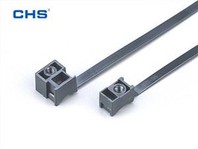
As a supplier of In Line Cable Ties, I've witnessed firsthand the widespread use and benefits of these products in various industries. They are incredibly useful for bundling cables, organizing wires, and securing objects in place. However, like any product, In Line Cable Ties also have their disadvantages. In this blog post, I'll delve into some of the drawbacks associated with these cable ties to provide a comprehensive understanding for potential users.
Limited Reusability
One of the most significant disadvantages of In Line Cable Ties is their limited reusability. Once these cable ties are tightened around a bundle of cables or an object, they are designed to lock in place. In most cases, attempting to loosen or remove them will result in damage to the cable tie itself. This means that if you need to make changes to your cable arrangement or reuse the cable tie for another purpose, you'll likely have to cut it off. After cutting, the cable tie is usually rendered useless and needs to be replaced with a new one. This lack of reusability can lead to increased costs over time, especially in large - scale projects where frequent adjustments are required. For comparison, Round Head Cable Ties may offer a bit more flexibility in some cases, but they still face similar reusability issues.
Brittleness Over Time
In Line Cable Ties are often made from materials such as nylon. While nylon is a durable and strong material, it can become brittle over time, especially when exposed to certain environmental conditions. High temperatures, UV radiation, and chemical exposure can all accelerate the degradation process of nylon cable ties. When a cable tie becomes brittle, it loses its flexibility and strength. This makes it more prone to breaking, even under normal stress. For example, in an outdoor setting where cables are exposed to sunlight and extreme temperatures, the In Line Cable Ties may start to crack and break after a relatively short period. This not only compromises the integrity of the cable bundle but also poses a safety risk, as loose cables can cause electrical hazards or other operational problems.
Difficulty in Adjustment
Another drawback of In Line Cable Ties is the difficulty in making adjustments once they are installed. As mentioned earlier, these cable ties are designed to lock in place firmly. Once tightened, it is very challenging to loosen them slightly to accommodate additional cables or make minor changes to the bundle. Unlike some other types of cable management solutions, such as Self Locking Cable Tie, which may offer a bit more adjustability, In Line Cable Ties often require cutting and replacing if any significant adjustments are needed. This can be time - consuming and inefficient, especially in a fast - paced work environment where quick modifications are necessary.
Size Limitations
In Line Cable Ties come in a variety of standard sizes. While these sizes cover a wide range of applications, there are still limitations. In some cases, you may encounter a cable bundle that is either too large or too small for the available cable tie sizes. If the cable tie is too small, it may not be able to securely hold the cables together, leading to a loose and unstable bundle. On the other hand, if the cable tie is too large, it may not provide a tight enough grip, and the cables can still move around within the tie. This can be a problem in industries where precise cable management is crucial, such as the aerospace or telecommunications industries. Chassis Cable Ties may have more specific sizing options for certain applications, but they too face general size - related limitations.
Environmental Impact
The environmental impact of In Line Cable Ties is also a concern. As they are often single - use items due to their limited reusability, they contribute to waste generation. Most cable ties are made from non - biodegradable materials like nylon, which means they can remain in landfills for a long time. In addition, the production process of these cable ties requires energy and resources, and the disposal of large numbers of used cable ties can have a negative impact on the environment. With the growing emphasis on sustainability in many industries, this is an aspect that cannot be ignored.


Cost - Benefit Consideration
When considering the disadvantages of In Line Cable Ties, it's important to also look at the cost - benefit ratio. While they have their drawbacks, they are also relatively inexpensive compared to some other cable management solutions. In many cases, the low cost makes them an attractive option for small - scale projects or applications where the disadvantages are not a major concern. However, in large - scale or long - term projects, the cumulative cost of replacing non - reusable cable ties, as well as the potential costs associated with cable tie failure, may outweigh the initial savings.
Mitigating the Disadvantages
Despite these disadvantages, there are ways to mitigate the negative impacts of using In Line Cable Ties. For example, choosing cable ties made from high - quality materials can reduce the risk of brittleness and breakage. Additionally, proper installation and maintenance can extend the lifespan of the cable ties. In some cases, using a combination of different types of cable management solutions, such as using In Line Cable Ties for initial bundling and then adding more adjustable ties for future adjustments, can be a practical approach.
Conclusion
In conclusion, while In Line Cable Ties are a popular and widely used cable management solution, they do have several disadvantages. These include limited reusability, brittleness over time, difficulty in adjustment, size limitations, and environmental impact. However, by being aware of these drawbacks and taking appropriate measures to mitigate them, users can still make effective use of In Line Cable Ties. If you're considering using In Line Cable Ties for your project, I encourage you to carefully evaluate your specific needs and weigh the pros and cons. If you have any questions or would like to discuss your cable management requirements further, feel free to reach out to us for a detailed consultation. We are here to help you find the most suitable cable management solutions for your projects.
References
- "Cable Tie Handbook", Industry Standard Publication
- Research papers on polymer degradation in relation to cable tie materials
- Case studies on cable management in different industries