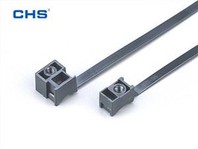
Hey there! As a supplier of Holder Cable Ties, I often get asked whether these ties work well in cold temperatures. It's a crucial question, especially for those who use cable ties in outdoor or cold - storage environments. Let's dig into this topic and find out how Holder Cable Ties fare in the cold.
First off, let's understand the basic materials of Holder Cable Ties. Most of these ties are made from nylon. Nylon is a popular choice for cable ties because it's strong, durable, and has good resistance to abrasion and chemicals. But like any material, its properties can change under different environmental conditions, including cold temperatures.
When the temperature drops, the molecular structure of nylon starts to change. Nylon becomes more rigid as it gets colder. This change in rigidity can have both positive and negative impacts on the performance of Holder Cable Ties.
On the positive side, the increased rigidity can sometimes enhance the holding strength of the cable ties. In normal conditions, a cable tie might have a bit of flexibility, which could allow for some minor movement of the cables it's holding. But in cold temperatures, the stiffer nylon can grip the cables more tightly, reducing the chances of the cables slipping out of the tie. This can be really useful in applications where a secure hold is essential, like in electrical installations or cable management in industrial settings.
However, there are also some potential drawbacks. The increased rigidity can make the cable ties more brittle. If you try to bend or manipulate a Holder Cable Tie in extremely cold conditions, there's a risk that it could crack or break. This is particularly important to keep in mind during installation. If workers are trying to install the ties in cold weather, they need to be extra careful not to apply too much force.
Another aspect to consider is the locking mechanism of Holder Cable Ties. Most cable ties have a ratchet - style locking system. In cold temperatures, the ratchet teeth might become less flexible, which could affect how smoothly the tie locks. There's a possibility that the tie might not lock as securely as it would in warmer conditions, or it could be more difficult to tighten the tie to the desired level.
Let's talk about some real - world scenarios. If you're using Holder Cable Ties in a cold - storage warehouse, where the temperature is consistently low, you might notice that the ties are a bit stiffer than usual. But as long as you handle them with care during installation, they should still be able to hold the cables in place effectively. On the other hand, if you're working on an outdoor project during a cold winter day, with temperatures well below freezing, you need to be extra cautious.
Now, let's compare Holder Cable Ties with some other types of cable ties in cold temperatures. Releasable Nylon Cable Ties are designed to be reusable. In cold weather, the release mechanism might be a bit more difficult to operate due to the increased rigidity of the nylon. But similar to Holder Cable Ties, they can still provide a good hold if installed correctly.
Mounted Head Cable Ties are often used for mounting cables to surfaces. In cold temperatures, the mounting part might become less flexible, which could make it a bit trickier to attach the tie to the surface. But again, the overall holding strength of the tie around the cables can still be decent.


To ensure the best performance of Holder Cable Ties in cold temperatures, here are some tips. First, store the ties in a warmer area before installation. This can help to bring them to a more flexible state. Second, use proper installation tools. A cable tie tensioner can help you tighten the ties to the right level without applying too much force that could cause the tie to break. Third, if possible, try to schedule installations during the warmer parts of the day when the temperatures are a bit more forgiving.
In conclusion, Holder Cable Ties can work well in cold temperatures, but they do come with some challenges. The increased rigidity can enhance the holding strength, but it also makes the ties more brittle. With proper handling and installation techniques, you can still get great performance out of these ties in cold environments.
If you're in the market for high - quality cable ties, especially Holder Cable Ties, don't hesitate to reach out for a purchase discussion. We're here to help you find the best solutions for your cable management needs, no matter the temperature conditions.
References
Some basic knowledge about the properties of nylon in different temperatures from general polymer science literature.
Personal experience and feedback from customers using cable ties in cold environments.