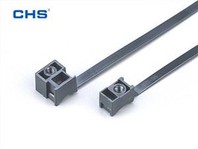
Expand plug cable ties are versatile and essential tools in various industries, from electrical work to automotive applications. They're super handy for organizing wires, cables, and other small items, providing a secure and efficient way to keep things neat and tidy. As a supplier of expand plug cable ties, I often get asked about the materials these ties are made of. So, let's dive into it!
Nylon: The Most Common Material
The most widely used material for expand plug cable ties is nylon. Nylon is a synthetic polymer that offers a bunch of great properties, which make it ideal for these types of cable ties.
Durability
Nylon is incredibly strong and resistant to wear and tear. It can withstand a fair amount of stress and tension without breaking. This means that once you use an expand plug cable tie made of nylon to secure your cables, you can be pretty confident that it'll hold up for a long time. Whether it's in a static environment or one with some movement and vibration, nylon cable ties are up to the task.
Chemical Resistance
Another awesome feature of nylon is its resistance to many chemicals. In industrial settings, cables might be exposed to various substances like oils, solvents, and cleaning agents. Nylon cable ties won't dissolve or degrade easily when they come into contact with these chemicals. This makes them suitable for use in harsh chemical environments where other materials might fail.
Temperature Resistance
Nylon can handle a wide range of temperatures. It remains flexible in cold conditions, so it won't become brittle and break when it's freezing outside. At the same time, it can withstand moderately high temperatures without melting or losing its shape. This temperature versatility makes nylon expand plug cable ties suitable for both indoor and outdoor applications.
For example, if you're looking for nylon cable ties, you can check out our Round Head Cable Ties. They're made of high - quality nylon and offer great performance.
Polypropylene
Polypropylene is another material used in the production of expand plug cable ties, although it's not as common as nylon.


Lightweight
Polypropylene is a lightweight material, which can be an advantage in some applications where weight is a concern. For instance, in the aerospace industry or in some portable electronic devices, using lightweight cable ties can help reduce the overall weight of the equipment.
Cost - Effective
It's generally less expensive than nylon. If you're on a tight budget and don't need the extreme durability and chemical resistance that nylon offers, polypropylene expand plug cable ties can be a good alternative. You can use them for less demanding applications like organizing small wires in a home office or for temporary cable management.
However, polypropylene doesn't have the same level of strength and chemical resistance as nylon. It's more prone to deformation under high stress and might not hold up as well in harsh chemical or high - temperature environments.
Stainless Steel
In some specialized applications, stainless steel is used to make expand plug cable ties.
High - Strength Applications
Stainless steel cable ties are incredibly strong. They can handle extremely high levels of tension and are suitable for applications where heavy - duty cable management is required. For example, in the construction of bridges or large industrial machinery, stainless steel expand plug cable ties can securely hold thick cables and wires in place.
Corrosion Resistance
Stainless steel is well - known for its corrosion resistance. It won't rust even when exposed to moisture and harsh outdoor conditions for long periods. This makes it a great choice for outdoor installations, such as in marine environments where cables are constantly exposed to saltwater.
But stainless steel cable ties are more expensive than nylon or polypropylene ones. They're also heavier, which might be a drawback in some weight - sensitive applications.
We also offer In Line Cable Ties in different materials, including nylon and polypropylene, to meet your specific needs.
Choosing the Right Material
When it comes to choosing the right material for expand plug cable ties, you need to consider several factors.
Application Requirements
Think about where the cable ties will be used. If it's in a harsh chemical environment, nylon is probably your best bet. For lightweight and cost - conscious projects, polypropylene might work. And for high - strength and corrosion - prone applications, stainless steel is the way to go.
Budget
Your budget is also a crucial factor. Nylon offers a good balance between performance and cost, but if you're really tight on money, polypropylene could save you some cash. Stainless steel is the most expensive option, so it's usually reserved for applications where its unique properties are absolutely necessary.
Aesthetic Considerations
Sometimes, the look of the cable ties matters. Nylon and polypropylene come in a variety of colors, which can be useful for color - coding cables in an electrical panel or for other organizational purposes.
As a supplier of Expand Plug Cable Ties, I understand that every customer has different needs. We offer a wide range of expand plug cable ties made from different materials to ensure that you can find the perfect solution for your project. Whether you need a large quantity for an industrial installation or just a few for a DIY project at home, we've got you covered.
If you're interested in purchasing expand plug cable ties or have any questions about our products, feel free to reach out to us. We're here to help you make the right choice and provide you with high - quality products at competitive prices. Contact us to start a discussion about your cable tie needs and let's find the best solution together.
References
- "Engineering Polymers Handbook", Edited by A. Blume, Springer
- "Plastics and Elastomers: Materials Selection and Applications", By W. N. Charles and R. G. Fink, ASM International