Hey there! As a supplier of nylon cable ties, I often get asked about the weight capacity of these handy little tools. It's a crucial question, especially for those who rely on cable ties to secure heavy or bulky items. In this blog post, I'll dive deep into what determines the weight capacity of nylon cable ties and how you can choose the right ones for your specific needs.
Understanding Nylon Cable Ties
First off, let's talk a bit about nylon cable ties. They're made from nylon, a strong and durable synthetic polymer. Nylon has excellent tensile strength, which means it can withstand a good amount of pulling force without breaking. That's why nylon cable ties are so popular for a wide range of applications, from organizing cables in electronics to securing loads in industrial settings.
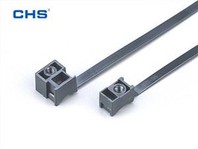
Nylon cable ties come in various sizes, colors, and styles. You've got the basic ones, and then there are specialized types like PE Ties, Holder Cable Ties, and Plastic Security Seals Ties. Each type has its own unique features and is designed for different purposes.
Factors Affecting Weight Capacity
So, what exactly determines the weight capacity of a nylon cable tie? Well, there are several key factors to consider:
1. Thickness and Width
One of the most obvious factors is the physical dimensions of the cable tie. Generally, thicker and wider cable ties can handle more weight. A wider tie distributes the load over a larger area, reducing the stress on any one point. And a thicker tie has more material to resist the pulling force. For example, a thin, narrow cable tie might only be able to hold a few pounds, while a thick, wide one could handle dozens or even hundreds of pounds.
2. Nylon Grade
Not all nylon is created equal. Different grades of nylon have different levels of strength and durability. Higher-grade nylon can withstand more stress and has a higher weight capacity. When choosing cable ties, it's important to know what grade of nylon they're made from. A good supplier should be able to provide this information.
3. Design and Construction
The design of the cable tie also plays a role in its weight capacity. Some cable ties have reinforced edges or teeth, which can increase their strength. Others might have a special locking mechanism that provides a more secure hold. Additionally, the quality of the manufacturing process can affect the overall strength of the tie. Well-made cable ties with precise dimensions and a consistent quality are more likely to have a reliable weight capacity.
4. Environmental Conditions
The environment in which the cable tie will be used can also impact its weight capacity. Extreme temperatures, moisture, and exposure to chemicals can all weaken the nylon over time. For example, if a cable tie is exposed to high heat for an extended period, the nylon might start to soften and lose its strength. So, it's important to choose cable ties that are suitable for the specific environmental conditions of your application.
How to Determine the Right Weight Capacity for Your Needs
Now that you know what factors affect the weight capacity of nylon cable ties, how do you choose the right ones for your project? Here are some steps to follow:
1. Calculate the Weight
First, you need to determine the weight of the items you'll be securing. This might seem obvious, but it's important to be as accurate as possible. If you're securing multiple items, add up their weights to get the total load.
2. Consider the Safety Factor
It's always a good idea to add a safety factor when choosing cable ties. A safety factor is an additional amount of strength that you build into your calculations to account for unexpected forces or variations in the load. A common safety factor is 2 or 3 times the actual weight of the load. So, if you're securing a load that weighs 10 pounds, you might want to choose cable ties with a weight capacity of at least 20 or 30 pounds.
3. Choose the Right Type of Cable Tie
Based on the weight and the application, choose the appropriate type of cable tie. For light-duty applications, a standard nylon cable tie might be sufficient. But for heavy-duty applications, you might need a specialized type like a heavy-duty or industrial-grade cable tie. You can also consider the environmental conditions and choose cable ties that are resistant to heat, moisture, or chemicals if necessary.
4. Check the Manufacturer's Specifications
Once you've narrowed down your choices, check the manufacturer's specifications for the cable ties. The specifications should include the weight capacity, as well as other important information like the length, width, and grade of nylon. Make sure the cable ties you choose meet your requirements.
Examples of Weight Capacities for Different Types of Cable Ties
To give you a better idea of the weight capacities of different types of nylon cable ties, here are some examples:
- Standard Nylon Cable Ties: These are the most common type of cable ties and are suitable for light to medium-duty applications. A typical 4-inch standard nylon cable tie might have a weight capacity of around 10 to 15 pounds, while a 12-inch one could handle up to 50 pounds or more.
- Heavy-Duty Nylon Cable Ties: Heavy-duty cable ties are designed for more demanding applications. They're usually thicker and wider than standard cable ties and have a higher weight capacity. A heavy-duty 12-inch cable tie might be able to hold 100 pounds or more.
- Industrial-Grade Nylon Cable Ties: Industrial-grade cable ties are the strongest and most durable type. They're made from high-quality nylon and are designed for extreme applications. These cable ties can have a weight capacity of several hundred pounds or even more.
Conclusion
In conclusion, the weight capacity of a nylon cable tie depends on several factors, including its thickness, width, nylon grade, design, and environmental conditions. By understanding these factors and following the steps outlined above, you can choose the right cable ties for your specific needs.
If you're in the market for nylon cable ties, we're here to help. As a trusted supplier, we offer a wide range of cable ties with different weight capacities and features. Whether you need standard cable ties for a simple project or heavy-duty ties for an industrial application, we've got you covered. Contact us to discuss your requirements and let's start a conversation about how we can provide the right cable ties for your business.


References
- "Nylon Cable Ties: A Comprehensive Guide" - Industry publication on cable tie technology and applications.
- Manufacturer's specifications and technical data sheets for nylon cable ties.