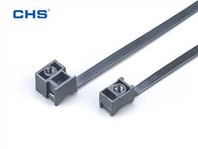
As a supplier of Expand Plug Cable Ties, I often receive inquiries from customers about the tensile strength of these products. Tensile strength is a crucial factor when it comes to cable ties, as it determines the maximum amount of force a cable tie can withstand before breaking. In this blog post, I will delve into the concept of tensile strength in Expand Plug Cable Ties, explaining what it means, how it is measured, and why it matters in various applications.
Understanding Tensile Strength
Tensile strength refers to the maximum stress that a material can withstand while being stretched or pulled before it fractures or breaks. In the context of Expand Plug Cable Ties, tensile strength indicates the amount of pulling force the cable tie can endure without snapping. This property is essential because cable ties are commonly used to secure and bundle various items, such as wires, cables, hoses, and pipes. If a cable tie has insufficient tensile strength, it may break under normal or unexpected loads, leading to potential safety hazards and the need for frequent replacements.
Measuring Tensile Strength
The tensile strength of Expand Plug Cable Ties is typically measured in pounds - force (lbf) or Newtons (N). To determine the tensile strength of a cable tie, a standardized testing procedure is followed. A sample of the cable tie is placed in a testing machine, which gradually applies a pulling force to the cable tie until it breaks. The maximum force recorded at the moment of breakage is the tensile strength of the cable tie.
There are several factors that can affect the tensile strength of Expand Plug Cable Ties. The material used to manufacture the cable tie is one of the most significant factors. Most Expand Plug Cable Ties are made from nylon, which is known for its high strength, durability, and resistance to abrasion and chemicals. However, different grades of nylon can have different tensile strengths. For example, nylon 6/6 is a commonly used material for cable ties and has relatively high tensile strength compared to other types of nylon.
The design and construction of the cable tie also play a role in its tensile strength. Expand Plug Cable Ties are designed with a unique expandable plug that allows them to be easily installed in pre - drilled holes. The thickness of the cable tie strap, the size and shape of the locking mechanism, and the quality of the manufacturing process can all impact the overall tensile strength of the cable tie.
Importance of Tensile Strength in Different Applications
In industrial settings, Expand Plug Cable Ties are often used to secure heavy - duty cables and wires. For example, in manufacturing plants, they are used to organize and bundle electrical cables in control panels, machinery, and equipment. In these applications, the cable ties need to have high tensile strength to withstand the vibrations, movements, and mechanical stresses that occur during normal operation. A cable tie with low tensile strength may break under these conditions, causing electrical shorts, equipment malfunctions, and even safety risks.


In automotive applications, Expand Plug Cable Ties are used to secure wiring harnesses, hoses, and other components. The automotive environment is harsh, with exposure to high temperatures, vibrations, and chemicals. Cable ties used in this industry need to have sufficient tensile strength to hold the components in place and prevent them from coming loose, which could lead to vehicle breakdowns or safety issues.
In the construction industry, Expand Plug Cable Ties are used to secure pipes, cables, and other building materials. They need to be able to withstand the weight and movement of these materials during construction and throughout the lifespan of the building. A cable tie with inadequate tensile strength may fail, causing damage to the building structure or the installed systems.
Comparing Tensile Strengths of Different Cable Tie Types
When considering Expand Plug Cable Ties, it's also useful to compare their tensile strengths with other types of cable ties. For example, Anti Skid Cable Tie are designed with a special anti - skid feature that provides additional holding power. These cable ties usually have a tensile strength that is comparable to or slightly higher than standard Expand Plug Cable Ties, depending on their size and material.
Double Locking Cable Ties are another type of cable tie known for their high strength. They have two locking mechanisms, which provide a more secure hold and generally have higher tensile strengths compared to single - locking Expand Plug Cable Ties. Double - locking cable ties are often used in applications where extra strength and security are required, such as in high - vibration environments or for securing large bundles of cables.
Selecting the Right Expand Plug Cable Tie Based on Tensile Strength
When choosing Expand Plug Cable Ties for a specific application, it's important to select a cable tie with an appropriate tensile strength. First, you need to estimate the maximum force that the cable tie will be subjected to in the application. This may involve considering factors such as the weight of the items being secured, the amount of movement or vibration in the environment, and any external forces that may act on the cable tie.
Once you have an estimate of the required force, you can choose a cable tie with a tensile strength that is higher than this estimated force. It's always a good idea to have a safety margin to account for any unexpected loads or variations in the application. For example, if you estimate that a cable tie will be subjected to a maximum force of 50 lbf, it's advisable to choose a cable tie with a tensile strength of at least 75 lbf.
Our Expand Plug Cable Ties and Their Tensile Strengths
As a supplier of Expand Plug Cable Ties, we offer a wide range of products with different tensile strengths to meet the diverse needs of our customers. Our cable ties are made from high - quality nylon 6/6, which ensures excellent tensile strength and durability.
We have conducted extensive testing on our Expand Plug Cable Ties to ensure that they meet or exceed industry standards. Our cable ties are available in various sizes and tensile strengths, ranging from lightweight cable ties with a tensile strength of around 10 lbf for small - scale applications to heavy - duty cable ties with a tensile strength of over 100 lbf for industrial and high - stress applications.
Contact Us for Your Expand Plug Cable Tie Needs
If you are in the market for Expand Plug Cable Ties and need to select the right product based on tensile strength, we are here to help. Our team of experts can provide you with detailed information about the tensile strengths of our different cable ties and assist you in choosing the most suitable product for your application.
Whether you are a small business looking to organize your office cables or a large industrial company in need of heavy - duty cable ties for your machinery, we can offer you the right solution at a competitive price. We are committed to providing our customers with high - quality products and excellent customer service.
If you have any questions or would like to discuss your Expand Plug Cable Tie requirements in more detail, please feel free to contact us. We look forward to working with you and helping you find the perfect cable ties for your needs.
References
- ASTM D638 - Standard Test Method for Tensile Properties of Plastics
- "Nylon Materials and Their Properties" - Polymer Science Journal
- Cable Tie Manufacturers Association (CTMA) Technical Guidelines