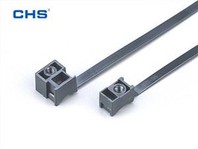
When it comes to securing and organizing cables, anti - skid cable ties are an indispensable tool. As a well - established supplier of anti - skid cable ties in the market, I've had the privilege of witnessing the evolution of these products and understanding the various technical aspects that make them a reliable choice for numerous applications. In this blog, we'll delve into the hardness of anti - skid cable ties, exploring why it matters and how different hardness levels fit into diverse scenarios.
Understanding the concept of hardness in anti - skid cable ties
Hardness in anti - skid cable ties is a measure of their resistance to deformation, indentation, or scratching. It is a crucial factor that influences the cable tie's performance, durability, and suitability for specific tasks. Typically, the hardness is determined by the materials used in manufacturing and the production process.
Most anti - skid cable ties are made from nylon, a high - performance thermoplastic polymer. Nylon offers a good balance between hardness and flexibility, making it ideal for cable management. Nylon cable ties can be produced in different grades, with varying hardness values adjusted to meet different needs.
The hardness of cable ties is usually measured using the Rockwell or Shore hardness scales. The Rockwell scale is more commonly used for harder materials, while the Shore scale is suitable for softer elastomers and plastics. For anti - skid cable ties, the Shore D scale is often employed to accurately measure their hardness range.
Importance of hardness in anti - skid cable ties
1. Strength and load - bearing capacity
A harder cable tie generally has a higher strength and can bear greater loads. In industrial settings where heavy cables need to be securely fastened, a cable tie with appropriate hardness is essential. For example, in power plants or manufacturing facilities, large - gauge electrical cables need to be organized and held in place to prevent any movement that could cause short circuits or equipment damage. Harder anti - skid cable ties can provide the necessary tension and support to ensure long - term stability.
2. Resistance to environmental factors
Harder cable ties are more resistant to environmental factors such as heat, cold, and chemicals. In high - temperature environments, like near machinery engines or in industrial ovens, a cable tie that softens easily under heat can lose its grip and functionality. Similarly, exposure to chemicals, such as solvents or cleaning agents, can degrade softer cable ties. Anti - skid cable ties with suitable hardness can withstand these harsh conditions, ensuring the integrity of the cable management system.
3. Anti - skid performance
The hardness of anti - skid cable ties is directly related to their anti - skid ability. A cable tie with the right hardness will have a better surface texture and friction coefficient, preventing it from slipping off the cables even under vibration or movement. This is especially important in automotive, aerospace, and marine applications where constant vibration is present.
Different levels of hardness and their applications
1. Soft - to - medium hardness (Shore D 35 - 50)
Cable ties in this hardness range are relatively flexible and are often used in applications where gentle handling of cables is required. For example, in the electronics industry, when securing delicate wires or circuit boards, soft - to - medium hardness cable ties won't damage the cables while still providing sufficient holding power. Round Head Cable Ties with this hardness level are popular for these types of applications due to their smooth and non - abrasive design.
2. Medium - to - hard hardness (Shore D 50 - 70)
This is the most common hardness range for anti - skid cable ties. Cable ties in this category strike a balance between flexibility and strength. They are suitable for a wide range of general - purpose applications, including home wiring, office cable management, and light - industrial use. Mounted Head Cable Ties with medium - to - hard hardness can be easily attached to various surfaces and provide a secure hold for cables of different sizes.


3. High hardness (Shore D 70 and above)
High - hardness cable ties are designed for heavy - duty applications. They are extremely strong and can withstand significant stress and tension. In construction sites, mining operations, or large - scale industrial projects, where thick and heavy cables need to be managed, high - hardness anti - skid cable ties are the preferred choice. Nylon Marker Cable Tie with high hardness can also be used in these settings, not only for cable binding but also for easy identification.
Factors affecting the hardness of anti - skid cable ties
1. Material composition
As mentioned earlier, most anti - skid cable ties are made of nylon. However, the specific type of nylon and its additives can significantly affect the cable tie's hardness. For example, adding fillers such as glass fibers can increase the hardness and strength of the cable tie. Different nylon formulations, such as nylon 6 or nylon 66, also have different hardness characteristics.
2. Manufacturing process
The manufacturing process plays a vital role in determining the hardness of cable ties. Injection molding, the most common method for producing cable ties, requires precise control of temperature, pressure, and cooling rates. Improper manufacturing parameters can lead to inconsistent hardness levels or even defects in the cable ties.
How to choose the right hardness of anti - skid cable ties
When selecting anti - skid cable ties for your project, there are several factors to consider:
1. Application requirements
Understand the specific needs of your project. If it's a light - duty application, a soft - to - medium hardness cable tie may be sufficient. For heavy - duty applications, opt for high - hardness cable ties.
2. Environmental conditions
Consider the environmental factors your cable ties will be exposed to, such as temperature, humidity, and chemicals. Choose a cable tie with a hardness level that can withstand these conditions.
3. Cable size and weight
The size and weight of the cables you need to secure also affect your choice. Larger and heavier cables require cable ties with higher hardness to ensure a secure hold.
Conclusion
The hardness of anti - skid cable ties is a critical factor that determines their performance, durability, and suitability for various applications. As a supplier, we understand the importance of providing high - quality cable ties with the right hardness for our customers' needs. Whether you're working on a small home project or a large - scale industrial operation, choosing the appropriate anti - skid cable tie hardness can make a significant difference in the effectiveness of your cable management system.
If you're interested in purchasing anti - skid cable ties and would like to discuss your specific requirements, feel free to reach out. We're here to help you find the best solutions for your cable management needs.
References
- Plastics Technology Handbook. Carl Hanser Verlag.
- Engineering Properties of Polymers and Composites. CRC Press.
- The Nylon Plastics Handbook. Hanser Gardner Publications.