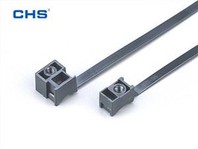
Determining the number of cable clips you need for your cables can be a tricky task. As a cable clips supplier, I've encountered numerous customers grappling with this question. In this blog post, I'll walk you through the key factors to consider and provide some guidelines to help you accurately estimate the quantity of cable clips required for your specific cable management project.
Factors Affecting the Number of Cable Clips
Cable Length
One of the most fundamental factors influencing the number of cable clips needed is the total length of the cables. Longer cables generally require more clips to ensure proper support and organization. For instance, if you have a 10 - meter cable, you'll likely need more clips compared to a 2 - meter cable. A common rule of thumb is to place a cable clip every 30 - 50 centimeters for horizontal runs of cables. This spacing helps prevent the cables from sagging and keeps them neatly aligned. For vertical runs, the clips can be placed a bit further apart, usually every 50 - 80 centimeters, as gravity provides some natural support.
Cable Type and Thickness
Different types of cables have varying weights and flexibility, which can impact the clip spacing. Thicker and heavier cables, such as power cables, need more frequent support. For example, a thick power cable might require a clip every 20 - 30 centimeters to prevent it from pulling down and potentially causing damage. On the other hand, thinner and more flexible cables, like Ethernet cables, can be spaced further apart, around 40 - 60 centimeters.
There are also different shapes of cables, such as flat cables, round cables, etc. Flat cables can be effectively managed with Flat Cable Clip. These clips are designed to hold flat cables securely without causing damage. Round cables, on the contrary, are better suited for Circle Cable Clips, which can wrap around the circular shape and provide a snug fit.
Installation Environment
The environment where the cables will be installed plays a crucial role. In a high - vibration environment, like a factory floor or a machine room, you'll need to increase the number of cable clips. The vibrations can cause the cables to move and potentially come loose, so more clips are required to keep them firmly in place. For example, in a factory with heavy machinery, cable clips should be placed every 20 - 30 centimeters, regardless of the cable type.
In a clean and stable environment, such as an office, you can follow the standard spacing guidelines mentioned earlier. However, if the cables are exposed to potential physical interference, like in an area with a lot of foot traffic, additional clips may be necessary to protect the cables.
Number of Cables Bundled Together
If you're bundling multiple cables together, you need to adjust the number of cable clips accordingly. Bundled cables are heavier and bulkier, so they need more support. For a bundle of 2 - 3 cables, you can follow the spacing guidelines for a single cable of similar thickness. But as the number of cables in the bundle increases, say to 5 or more, you should reduce the clip spacing. For a bundle of 5 or more cables, place a clip every 20 - 30 centimeters to ensure the bundle stays intact.
Calculating the Number of Cable Clips
Let's go through a step - by - step process to calculate the number of cable clips for your cables:
- Measure the Cable Length: Use a measuring tape to determine the total length of each cable or cable bundle. Make sure to account for any bends or curves in the cable path.
- Determine the Clip Spacing: Based on the factors mentioned above (cable type, installation environment, etc.), decide on the appropriate clip spacing. For example, if you have a thin Ethernet cable in an office environment, you might choose a spacing of 50 centimeters.
- Calculate the Number of Clips per Cable: Divide the cable length by the clip spacing. For instance, if you have a 5 - meter Ethernet cable with a clip spacing of 50 centimeters (or 0.5 meters), the calculation would be (5\div0.5 = 10) clips. However, you should always add an extra clip or two at the ends of the cable for better security. So, in this case, you would need 12 clips.
- Sum Up for All Cables: If you have multiple cables or cable bundles, repeat the above steps for each one and then add up the total number of clips required.
Special Considerations for Different Types of Cable Clips
K Type Cable Clips
K Type Cable Clips are a popular choice for many cable management projects. They are versatile and can be used for both single cables and cable bundles. When using K - type cable clips, you can generally follow the same spacing guidelines as other types of clips. However, these clips are known for their strong grip, so in some cases, you might be able to increase the clip spacing slightly, especially for lighter cables.
Circle Cable Clips
Circle cable clips are specifically designed for round cables. They provide a 360 - degree grip around the cable, ensuring maximum stability. When using circle cable clips, make sure to choose the right size for your cable. If the clip is too small, it might damage the cable; if it's too large, it won't hold the cable securely. The spacing for circle cable clips should be adjusted based on the cable thickness and installation environment, similar to other clip types.
Flat Cable Clip
Flat cable clips are ideal for managing flat cables, such as ribbon cables. These clips are usually designed to hold the flat cable in a flat position, preventing it from curling or twisting. When using flat cable clips, you can place them at regular intervals along the length of the cable. The spacing can be a bit wider than for round cables of similar thickness, around 40 - 60 centimeters, depending on the cable's flexibility and the installation environment.


Conclusion
Calculating the number of cable clips you need for your cables is not an exact science, but by considering the factors mentioned above, you can make a reasonable estimate. Remember to account for cable length, type, installation environment, and the number of cables bundled together. By choosing the right type of cable clips, such as Flat Cable Clip, K Type Cable Clips, or Circle Cable Clips, and using the appropriate spacing, you can ensure a well - organized and secure cable management system.
If you're still unsure about the number of cable clips you need or have any questions about our cable clip products, feel free to reach out. We're here to help you with your cable management needs and ensure you get the right quantity of high - quality cable clips for your project. Contact us to start the procurement process and discuss your specific requirements.
References
- "Cable Management Best Practices", Electrical Engineering Handbook
- "Guide to Cable Clip Selection and Installation", Industry Standards Publication