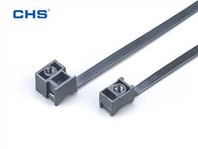
Hey there! As a supplier of buckle cable ties, I've dealt with all sorts of these handy little tools. And one question I get a lot is, "How do you know if a buckle cable tie is of good quality?" Well, I'm here to break it down for you.
1. Material Matters
First off, the material of the cable tie is super important. Most buckle cable ties are made from nylon. High - quality nylon is tough, durable, and can withstand a fair amount of wear and tear. You want a cable tie that's made from a strong grade of nylon, like nylon 66. This type of nylon has excellent tensile strength, which means it can hold up well under pressure.
A good way to test the material is to give the cable tie a little bend. If it snaps easily, that's a red flag. A quality cable tie should be flexible but not brittle. It should be able to bend without breaking, even if you do it a few times. Also, check for any signs of discoloration or uneven texture on the surface. A well - made cable tie will have a smooth, consistent finish.


2. Tensile Strength
Tensile strength is another key factor. It refers to the maximum amount of pulling force a cable tie can handle before it breaks. You can usually find the tensile strength rating on the packaging or product description. For general household use, a cable tie with a tensile strength of around 18 - 25 pounds might be sufficient. But if you're using it in an industrial setting or for heavy - duty applications, you'll want a cable tie with a much higher tensile strength, say 50 pounds or more.
To test the tensile strength yourself (within reason), you can try tying the cable tie around a solid object and then gradually applying some pulling force. Of course, don't go overboard and risk getting hurt. Just give it a gentle tug and see how it holds up. If it starts to stretch too much or comes apart easily, it might not be of good quality.
3. Locking Mechanism
The locking mechanism of a buckle cable tie is what keeps it in place. A good locking mechanism should be secure and easy to use. When you insert the tail of the cable tie into the buckle, it should click into place firmly. There shouldn't be any looseness or play once it's locked.
Try unlocking and relocking the cable tie a few times. A quality cable tie will maintain its locking ability even after multiple uses. If the lock becomes loose or doesn't hold after a couple of tries, that's a sign that the locking mechanism might be faulty.
4. Temperature Resistance
Depending on where you're going to use the cable tie, temperature resistance can be a big deal. Some environments can get really hot or really cold, and a cable tie that can't handle the temperature extremes might fail.
High - quality cable ties are designed to withstand a wide range of temperatures. For example, they should be able to function properly in temperatures ranging from - 40°F to 185°F. If you're using the cable ties outdoors in the winter or in a hot industrial oven, make sure they have the appropriate temperature rating.
5. UV Resistance
If you're using the cable ties outdoors, UV resistance is crucial. The sun's ultraviolet rays can break down the material of the cable tie over time, making it brittle and prone to failure.
A good quality cable tie will have UV - resistant additives in the material. You can usually tell if a cable tie is UV - resistant by looking for a label or description that mentions it. If you're not sure, you can also do a simple test. Leave a cable tie outside in direct sunlight for a few weeks and then check its condition. If it's become brittle or has lost its flexibility, it might not be UV - resistant.
6. Compatibility
Think about what you're going to use the cable tie for. Different applications might require different types of cable ties. For example, if you need to label your cables, you might want to check out Nylon Marker Cable Tie. These cable ties have a space where you can write or attach a label.
If you're working in an area where there's a risk of slipping, Anti Skid Cable Tie could be a great option. They're designed to provide extra grip and prevent the cable tie from sliding around.
And for applications where you need a cable tie that can lock itself easily and securely, Self Locking Cable Tie is the way to go.
7. Brand Reputation
Brand reputation can also give you a good idea about the quality of a cable tie. A well - known and respected brand is more likely to produce high - quality products. They usually have strict quality control measures in place and are more likely to stand behind their products.
You can check online reviews and customer feedback to see what other people are saying about a particular brand of cable ties. If a brand has a lot of negative reviews or complaints about breakage, poor locking, or other quality issues, it might be best to steer clear.
8. Price
While price isn't always an indicator of quality, extremely cheap cable ties are often of lower quality. If a cable tie is priced significantly lower than others on the market, it might be using inferior materials or have a poorly designed locking mechanism.
On the other hand, just because a cable tie is expensive doesn't necessarily mean it's the best quality. You need to consider all the factors mentioned above and find a balance between price and quality.
Let's Talk Business
If you're in the market for high - quality buckle cable ties, I'd love to have a chat with you. Whether you're a small business owner looking for cable ties for your daily operations or a large industrial company in need of bulk orders, I can help you find the right cable ties for your needs. I've got a wide range of cable ties in different sizes, strengths, and features to suit various applications. So, don't hesitate to reach out and let's start a conversation about your cable tie requirements.
References
- General knowledge and experience in the cable tie industry.
- Product specifications and research on cable tie materials and manufacturing processes.