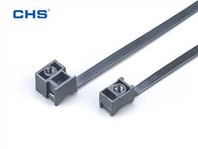
As a supplier of Nylon Marker Cable Ties, I often encounter customers who need guidance on replacing damaged cable ties. In this blog post, I'll walk you through the step - by - step process of replacing a damaged nylon marker cable tie, and also highlight some of the related products we offer.
Why Replace a Damaged Nylon Marker Cable Tie?
Nylon Marker Cable Ties are used in a wide range of applications, from organizing cables in electrical systems to marking and identifying wires in industrial settings. A damaged cable tie can compromise the safety and functionality of the system. For example, if a cable tie is broken, the cables it was holding together may become loose, leading to potential short - circuits or tangling. Moreover, a damaged marker may make it difficult to identify the cables, causing confusion during maintenance or troubleshooting.
Tools You'll Need
Before you start replacing the damaged cable tie, gather the necessary tools. You'll need a pair of sharp scissors or a cable tie cutter. A cable tie cutter is preferred as it provides a clean cut and is less likely to damage the surrounding cables. Additionally, have a new Nylon Marker Cable Tie on hand. Make sure the new cable tie has the appropriate size and strength for your application.
Step 1: Assess the Damage
The first step is to carefully examine the damaged cable tie. Determine the extent of the damage. Is it a simple tear in the marker area, or is the entire tie broken? Check if the cables it was holding are still in place and undamaged. If the cables are loose or disorganized, take note of their original positions for easy re - arrangement.
Step 2: Remove the Damaged Cable Tie
If the cable tie is only slightly damaged and still attached to the cables, use your scissors or cable tie cutter to cut the tie near the locking end. Be careful not to cut into the cables themselves. If the tie is completely broken and parts are loose, simply remove all the pieces from the cables.
Step 3: Clean the Area
After removing the damaged cable tie, clean the area around the cables. Remove any debris, dust, or small pieces of the old cable tie. This will ensure that the new cable tie can be installed properly and will not be affected by any foreign objects.


Step 4: Choose the Right Replacement
Select a new Nylon Marker Cable Tie that matches the size and specifications of the old one. Consider the diameter of the cables you need to bundle, the strength requirements, and the marking information you need. If you're unsure, refer to the product documentation or contact our customer support team for advice.
Step 5: Install the New Cable Tie
Take the new cable tie and insert the end through the locking mechanism. Make sure the marker is facing the correct direction for easy identification. Then, wrap the cable tie around the cables you want to bundle. Pull the end of the cable tie tightly through the locking mechanism until the cables are securely held together. Trim any excess length of the cable tie using your scissors or cable tie cutter.
Related Products
In addition to Nylon Marker Cable Ties, we also offer a variety of other cable tie products. Saddle Mounting Cable Ties are great for applications where you need to mount cables to a surface. They provide a stable and secure way to attach cables to panels, racks, or other structures.
Our PE Ties are another option. Made from polyethylene, these ties are lightweight and flexible. They are suitable for applications where you need a less rigid cable tie, such as in some automotive or consumer electronics applications.
Tips for Long - Term Use
To ensure the long - term performance of your cable ties, follow these tips:
- Avoid over - tightening the cable ties. Over - tightening can cause stress on the cables and may lead to premature failure of the tie.
- Protect the cable ties from extreme temperatures, chemicals, and UV exposure. These factors can degrade the material of the cable tie over time.
- Regularly inspect your cable ties for signs of damage or wear. Replace any damaged ties promptly to prevent any potential issues.
Conclusion
Replacing a damaged nylon marker cable tie is a relatively simple process that can be done with a few basic tools. By following the steps outlined in this blog post, you can ensure that your cables are properly organized and secured. As a supplier of high - quality cable ties, we are committed to providing you with the best products and support.
If you have any questions about our Nylon Marker Cable Ties or other cable tie products, or if you're interested in placing an order, please feel free to reach out. We look forward to discussing your cable tie needs and helping you find the right solutions for your applications.
References
- "Cable Tie Handbook", Industry Standard Publication
- Manufacturer's product documentation for Nylon Marker Cable Ties, Saddle Mounting Cable Ties, and PE Ties.