Hey there! As a supplier of nylon cable ties, I often get asked the question: "Do nylon cable ties corrode?" It's a valid concern, especially when you're looking to use these ties in various environments for long - term applications. Let's dig into this topic and find out the truth.
What are Nylon Cable Ties?
First off, let's quickly go over what nylon cable ties are. They're these handy little tools made from nylon, a type of plastic polymer. Nylon is known for its strength, flexibility, and durability. We use nylon cable ties in a ton of different situations, like bundling cables in electrical systems, organizing cords at home, or even in some industrial applications.


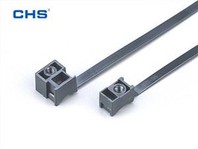
There are different types of nylon cable ties available too. For instance, you've got Push Mount Ties, which are great for mounting cables to surfaces easily. Then there are Saddle Mounting Cable Ties, perfect for securing cables along a flat surface. And don't forget Chassis Cable Ties, which are designed for use in chassis or frames.
Understanding Corrosion
Before we talk about whether nylon cable ties corrode, we need to understand what corrosion is. Corrosion is basically the deterioration of a material due to chemical reactions with its environment. Metals are the most common materials that we think of corroding. For example, when iron rusts, that's a form of corrosion. It happens when iron reacts with oxygen and water in the air.
Do Nylon Cable Ties Corrode?
The short answer is that nylon cable ties generally don't corrode in the same way that metals do. Nylon is a non - metallic material, so it doesn't rust or oxidize like iron or steel. However, that doesn't mean it's completely immune to damage from its environment.
Chemical Exposure
One of the main factors that can affect nylon cable ties is exposure to certain chemicals. Some strong acids, alkalis, and solvents can break down the nylon over time. For example, concentrated sulfuric acid or sodium hydroxide can react with the nylon, causing it to become brittle or even dissolve. But in normal, everyday situations, you're not likely to come across these kinds of extreme chemicals.
In most industrial and household settings, the chemicals that nylon cable ties are exposed to are relatively mild. Things like cleaning agents or a bit of moisture from normal humidity usually won't cause any significant damage. However, if you're using the cable ties in an environment where they'll be in contact with harsh chemicals on a regular basis, you'll need to choose a more chemical - resistant type of nylon or consider using a different material altogether.
UV Exposure
Another thing that can impact nylon cable ties is ultraviolet (UV) radiation from the sun. When nylon is exposed to UV rays for long periods, it can start to break down. The UV rays can cause the nylon to become discolored, brittle, and lose its strength. This is a big concern if you're using the cable ties outdoors.
To combat this, many nylon cable ties are now treated with UV stabilizers. These stabilizers help to protect the nylon from the harmful effects of UV radiation. If you're planning to use the cable ties outside, make sure to choose ones that are labeled as UV - resistant. This way, you can be confident that they'll last longer and maintain their performance even when exposed to the sun.
Temperature
Temperature also plays a role in the lifespan of nylon cable ties. Nylon has a certain temperature range in which it performs best. At very high temperatures, nylon can start to soften and lose its shape. On the other hand, at extremely low temperatures, it can become brittle and more likely to break.
Most standard nylon cable ties are designed to work within a temperature range of around - 40°F to 185°F (- 40°C to 85°C). If you need to use the cable ties in an environment with extreme temperatures, you'll need to look for ones that are specifically designed for those conditions. There are high - temperature nylon cable ties available that can withstand much higher temperatures, and low - temperature ones that remain flexible in cold environments.
Testing and Quality Assurance
As a supplier, we take the quality of our nylon cable ties very seriously. We conduct a variety of tests to make sure that our products can withstand different environmental conditions. For example, we test for chemical resistance by exposing the cable ties to different chemicals and monitoring their performance over time. We also test for UV resistance by subjecting the ties to artificial UV light in a laboratory setting.
We use these test results to improve our products and ensure that they meet the highest standards. By doing so, we can provide our customers with cable ties that are reliable and long - lasting, no matter where they're used.
Conclusion
So, to sum it up, nylon cable ties don't corrode in the traditional sense like metals do. But they can be affected by chemical exposure, UV radiation, and temperature. By choosing the right type of cable ties for your specific application and taking proper precautions, you can minimize the risk of damage and ensure that they last as long as possible.
If you're in the market for high - quality nylon cable ties, whether it's for a small home project or a large - scale industrial application, we've got you covered. We offer a wide range of cable ties, including Push Mount Ties, Saddle Mounting Cable Ties, and Chassis Cable Ties.
If you have any questions or want to discuss your specific needs, don't hesitate to reach out. We're here to help you find the perfect cable ties for your project. Let's start a conversation and see how we can work together to get you the best products at the best prices.
References
- "Nylon Polymers: Properties and Applications" by Polymer Science Press
- "Corrosion and Degradation of Plastics" in the Journal of Materials Science