Can Push Mount Ties be used to secure electrical cables in a building?
As a supplier of Push Mount Ties, I often get asked whether these ties can be effectively used to secure electrical cables in a building. In this blog post, I'll delve into the suitability of Push Mount Ties for this purpose, exploring their features, benefits, and potential limitations.
Understanding Push Mount Ties
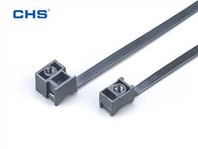
Push Mount Ties are a type of cable management solution designed to provide a quick and easy way to secure cables. They typically consist of a tie body and a mounting base. The tie body is used to wrap around the cables, while the mounting base is pushed into a pre - drilled hole in a surface, such as a wall or a panel. This creates a stable and secure attachment point for the cables.
One of the key advantages of Push Mount Ties is their ease of installation. Unlike some other cable - securing methods that may require tools or complex procedures, Push Mount Ties can be installed by simply pushing the mounting base into place. This not only saves time but also reduces the need for specialized labor, making them a cost - effective option for cable management in buildings.
Suitability for Electrical Cable Securing
Safety Considerations
When it comes to securing electrical cables, safety is of utmost importance. Push Mount Ties are generally made from high - quality materials such as nylon, which have good insulation properties. This helps to prevent electrical short - circuits that could occur if the cables were to come into contact with conductive surfaces. Additionally, the ties are designed to hold the cables firmly in place, reducing the risk of cables becoming loose and potentially causing a fire hazard.
Cable Protection
Push Mount Ties also provide a degree of protection for the electrical cables. By holding the cables in a neat and organized manner, they prevent the cables from being bent or kinked, which can damage the internal conductors and affect the performance of the electrical system. Moreover, the ties can help to protect the cables from physical damage, such as being accidentally knocked or pulled.
Flexibility and Adaptability
In a building, electrical cables may need to be routed in various directions and around different obstacles. Push Mount Ties offer a high degree of flexibility in cable routing. They can be easily adjusted and re - positioned as needed, allowing for changes in the cable layout without having to completely remove and reinstall the ties. This is particularly useful in buildings where electrical systems may need to be modified or expanded over time.
Comparing with Other Cable - Securing Options
Saddle Mounting Cable Ties
Saddle Mounting Cable Ties are another popular option for cable management. While they are also effective in securing cables, they may require more complex installation procedures compared to Push Mount Ties. Saddle Mounting Cable Ties often need to be attached to a surface using screws or other fasteners, which can be time - consuming and may require drilling holes in the surface. In contrast, Push Mount Ties offer a quicker and more straightforward installation process.
Releasable Push Mount Cable Tie
Releasable Push Mount Cable Tie is a variation of the standard Push Mount Tie. These ties have a mechanism that allows them to be easily released and reused. This can be an advantage in situations where cables need to be frequently accessed or replaced. However, the standard Push Mount Ties are more suitable for long - term cable securing where there is no need for frequent release.
PE Ties
PE Ties are made from polyethylene, which is a different material compared to the nylon used in Push Mount Ties. PE Ties are generally less strong than nylon Push Mount Ties and may not be as suitable for heavy - duty cable - securing applications. Push Mount Ties, with their higher strength and better insulation properties, are a better choice for securing electrical cables in buildings.
Potential Limitations
While Push Mount Ties have many advantages for securing electrical cables in buildings, they also have some potential limitations.
Load Capacity
Push Mount Ties have a limited load - capacity. If the cables are very thick or heavy, multiple ties may be required to ensure proper securing. In some cases, for extremely heavy cable bundles, alternative cable - securing methods may need to be considered.


Environmental Conditions
In harsh environmental conditions, such as high - temperature or high - humidity areas, the performance of Push Mount Ties may be affected. Nylon, although a durable material, can degrade over time under extreme conditions. It's important to choose the appropriate type of Push Mount Ties based on the specific environmental conditions in the building.
Conclusion
In conclusion, Push Mount Ties can be a viable option for securing electrical cables in a building. They offer ease of installation, safety, cable protection, and flexibility. While they have some limitations, these can be managed by proper selection and installation. When compared to other cable - securing options, Push Mount Ties often provide a good balance between cost, performance, and convenience.
If you are in the process of managing electrical cables in a building and are considering using Push Mount Ties, I encourage you to reach out for more information. We can provide detailed product specifications, samples, and advice on the best way to use our Push Mount Ties for your specific application. Contact us to start a procurement discussion and find the ideal cable - management solution for your building.
References
- "Cable Management Handbook", published by ABC Publishing
- Industry standards on electrical cable installation and management