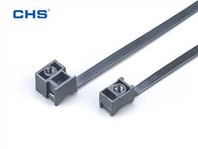
Hey there, folks! As a supplier of PE Ties, I often get asked a bunch of questions about these nifty little ties. One of the most common ones is, "Can PE ties be used for tying down tarps?" Well, that's what we're going to dig into today.
Let's start off by getting to know what PE ties are. PE stands for Polyethylene, and these ties are made from this super - versatile plastic material. They're tough and flexible, which in a nutshell, gives them a lot of potential uses.
Why People Think of Using PE Ties for Tarps
Tarps are useful in all sorts of situations. Whether you're covering a boat during the winter months, protecting construction materials from the rain, or shielding a garden from harsh sunlight, a good tarp can come in handy. But to make sure your tarp stays put, you need a reliable way to tie it down. This is where PE ties come into the picture.
One of the great things about PE ties is their strength. They can withstand a good amount of tension without snapping. So, when you're tying down a tarp, say over a large storage trailer, the wind might try to lift it up, but a properly secured PE tie can hold the tarp in place.
Another advantage is their flexibility. PE ties can easily bend around the edges of the tarp and different anchor points. For example, if you're using ropes to hold the tarp in position and want to secure them more firmly, you can use these ties to make extra - tight connections. You can loop them through the grommets on the tarp and around a railing or a stake on the ground.
Comparing PE Ties with Other Cable Ties
There are other types of cable ties in the market, and it's worth comparing them with PE ties to see why they might be suitable for tarp - tying jobs.
Let's take a look at the "Magic Cable Ties" Magic Cable Ties. These ties are known for their special locking mechanism that makes them quick and easy to use. They're often used in electrical installations to bundle wires neatly. However, when it comes to tying down a large, heavy tarp, their strength might not be as good as PE ties. Magic cable ties are usually designed for lighter - duty applications, so in high - wind or heavy - load situations, you might find them breaking under the pressure.
Double - locking cable ties Double Locking Cable Tie offer an extra level of security with their double - locking technology. While they are stronger than some basic cable ties, they can be a bit rigid. When tying a tarp around irregular shapes or objects, their lack of flexibility can be a drawback. You might find it difficult to maneuver them around the corners of a tarp or through small grommets.
On the other hand, PE ties have a good balance of strength and flexibility, making them a more practical option for tarp - tying in many real - life situations.


Real - World Applications
I've had customers tell me about all the different ways they've used PE ties to secure tarps.
One farmer used them to secure a large tarp over his haystack. The haystack was a big, round shape, and it was tricky to keep the tarp in place with just ropes. He used the PE ties to connect the ropes at different points around the haystack and looped them through the grommets on the tarp. Even during heavy storms, the tarp stayed put, protecting the hay from getting wet.
In the construction industry, many workers use PE ties to tie down tarps over building materials. Construction sites are often exposed to strong winds and rain. By using PE ties to secure the tarps, they ensure that expensive materials like lumber, steel bars, and cement bags are protected from the elements.
Potential Drawbacks
Now, it's not all sunshine and rainbows with PE ties when it comes to tarp - tying. One of the downsides is that prolonged exposure to sunlight can cause the PE material to degrade over time. UV rays break down the molecular structure of polyethylene, which can make the ties weaker. So, if you're using PE ties to secure a tarp outdoors all year round, you might have to replace them periodically.
Also, extreme cold temperatures can make PE ties more brittle. In regions where the winter temperatures drop significantly, the ties might become more likely to snap. You need to be aware of these factors and take appropriate measures, like using covers or choosing a different type of tie for extreme - weather conditions.
Conclusion
So, can PE ties be used for tying down tarps? The answer is a resounding yes, in most cases. They offer a good combination of strength and flexibility, which makes them suitable for a wide range of tarp - tying jobs.
If you're in the market for some high - quality PE ties, we've got you covered. I'd love to talk to you about your specific needs. Whether you're a farmer, a construction worker, or just someone looking to secure a small tarp in your backyard, our ties are designed to get the job done. Don't hesitate to reach out and start a conversation about your procurement requirements.
References
- "Plastic Materials: Properties and Applications" - A general reference on polyethylene and other plastics which helps understand the characteristics of PE ties.
That's it for today's blog. I hope you found it informative, and I'm looking forward to hearing from you about your tarp - tying adventures!