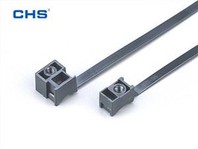
Hey there! As a supplier of Mounted Head Cable Ties, I often get asked whether these little guys can be used in automotive engine compartments. It's a valid question, considering the tough environment under the hood. So, let's dive right in and explore this topic.
The Environment in Automotive Engine Compartments
First off, we need to understand what the engine compartment is like. It's a pretty harsh place. Temperatures can soar up to 150°C (302°F) or even higher in some high - performance engines. There are also all sorts of chemicals floating around, like engine oil, coolant, and fuel. Vibration is another big factor. The engine is constantly running, and all that shaking can put a lot of stress on any components in the area.


Properties of Mounted Head Cable Ties
Mounted Head Cable Ties are designed to hold cables and wires in place. They have a head that can be mounted on a surface, which provides a stable way to organize the wiring. Most of these cable ties are made of nylon, which has some great properties. Nylon is strong, flexible, and can withstand a fair amount of heat. It also has good chemical resistance, which is important when dealing with the various fluids in an engine compartment.
Heat Resistance
One of the key concerns when using Mounted Head Cable Ties in an engine compartment is heat resistance. As I mentioned earlier, the temperatures can get really high. Standard nylon cable ties can usually handle temperatures up to around 85°C (185°F). However, there are high - temperature nylon variants available that can withstand temperatures up to 150°C (302°F) or more. If you're using Mounted Head Cable Ties in an engine compartment, it's crucial to choose a high - temperature rated one. This ensures that the cable ties won't melt or become brittle over time, which could lead to the cables coming loose.
Chemical Resistance
The chemicals in an engine compartment can be pretty corrosive. Engine oil, for example, can break down some materials over time. But nylon has good resistance to many common automotive fluids. It won't dissolve or degrade quickly when exposed to oil, coolant, or fuel. This means that Mounted Head Cable Ties made of nylon can maintain their integrity and continue to hold the cables in place, even in a chemical - rich environment.
Vibration Resistance
Vibration is another challenge in the engine compartment. The constant shaking can cause the cable ties to loosen if they're not properly designed. Mounted Head Cable Ties are designed with a locking mechanism that keeps them tightly in place. The mounting head also provides additional stability. Some of our Mounted Head Cable Ties even have features like serrated teeth that grip the cable more firmly, reducing the risk of the cable tie coming loose due to vibration.
Compatibility with Other Components
When using Mounted Head Cable Ties in an engine compartment, it's important to consider their compatibility with other components. For example, they should not interfere with the movement of other parts or cause any electrical issues. Most Mounted Head Cable Ties are non - conductive, which means they won't cause any short - circuits. And their small size and shape usually allow them to fit neatly among the other components in the engine compartment.
Other Types of Cable Ties for Automotive Use
While Mounted Head Cable Ties are a great option for engine compartments, there are other types of cable ties that might also be useful in automotive applications. For example, Chassis Cable Ties are designed for use on the chassis of the vehicle. They can be used to secure wiring harnesses along the frame. Dual Lock Cable Ties offer a double - locking mechanism, which provides extra security. And Expand Plug Cable Ties are useful for applications where you need to secure cables in tight spaces.
Installation Considerations
Proper installation is key when using Mounted Head Cable Ties in an engine compartment. First, make sure the surface where you're mounting the cable tie is clean and dry. Any dirt or oil on the surface can reduce the adhesion of the mounting head. When threading the cable through the tie, be careful not to over - tighten it. Over - tightening can damage the cable insulation or cause the cable tie to break. It's also a good idea to leave a little bit of slack in the cable to allow for movement and expansion.
Quality Assurance
As a supplier of Mounted Head Cable Ties, we take quality seriously. All our cable ties go through rigorous testing to ensure they meet the required standards. We test for heat resistance, chemical resistance, and tensile strength. This means that when you buy our Mounted Head Cable Ties, you can be confident that they'll perform well in an automotive engine compartment.
Conclusion
So, can Mounted Head Cable Ties be used in automotive engine compartments? The answer is yes, but with some considerations. You need to choose high - temperature rated cable ties, ensure proper installation, and make sure they're compatible with the other components in the engine. With the right type of Mounted Head Cable Ties and proper installation, they can be a reliable way to organize the wiring in an engine compartment.
If you're in the automotive industry and looking for high - quality Mounted Head Cable Ties or other types of cable ties, we'd love to talk to you. We have a wide range of products to meet your needs, and our team of experts can help you choose the right ones for your specific application. Contact us to start a procurement discussion and find out how we can help you keep your automotive wiring organized and secure.
References
- "Automotive Wiring Harness Design and Installation Guide"
- "Nylon Materials and Their Applications in Automotive Components"