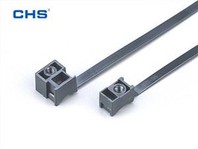
Can beaded cable ties withstand high temperatures?
As a supplier of beaded cable ties, I often receive inquiries from customers about the performance of our products under various conditions, especially their ability to withstand high temperatures. This is a crucial aspect, as many industrial and commercial applications expose cable ties to elevated temperatures, and their integrity under such conditions can significantly impact the safety and functionality of the entire system.
Beaded cable ties are widely used for bundling wires, cables, and other items in a variety of industries, including automotive, aerospace, electrical, and telecommunications. They offer several advantages, such as ease of installation, flexibility, and a secure hold. However, when it comes to high - temperature environments, we need to analyze their performance based on scientific principles and material properties.
Material Composition of Beaded Cable Ties
Most beaded cable ties are made from nylon 6/6, a popular thermoplastic polymer. Nylon 6/6 is known for its excellent mechanical properties, including high tensile strength, good abrasion resistance, and moderate chemical resistance. But its performance at high temperatures is a subject of interest.
Nylon 6/6 has a melting point of approximately 250 - 260°C (482 - 500°F). However, long - term exposure to temperatures close to its melting point can cause the material to soften, lose its mechanical strength, and eventually deform. In general, for continuous use, nylon 6/6 cable ties are recommended to be used in environments where the temperature does not exceed 85 - 105°C (185 - 221°F).
Impact of High Temperatures on Beaded Cable Ties
When beaded cable ties are exposed to high temperatures, several physical and chemical changes can occur.
Physical Changes
- Softening and Deformation: As the temperature rises, the nylon 6/6 material begins to soften. This softening can cause the cable tie to lose its shape, which may lead to a loosening of the bundle it is holding. For example, in an automotive engine compartment, where temperatures can reach high levels, a softened cable tie may no longer securely hold the wiring harnesses, potentially leading to electrical shorts or other malfunctions.
- Reduction in Tensile Strength: High temperatures also reduce the tensile strength of the cable tie. Tensile strength is the maximum amount of pulling force a cable tie can withstand before breaking. A decrease in tensile strength means that the cable tie is more likely to break under normal or even slightly increased loads. In industrial settings, this can be a significant safety concern, especially when the cable ties are used to secure heavy or critical components.
Chemical Changes
- Oxidation: At high temperatures, nylon 6/6 can undergo oxidation. Oxidation is a chemical reaction between the material and oxygen in the air, which can lead to the degradation of the polymer chains. This degradation can further weaken the cable tie and reduce its lifespan.
- Hydrolysis: If there is moisture present in the environment, nylon 6/6 can also undergo hydrolysis at high temperatures. Hydrolysis is a chemical reaction where water breaks down the polymer chains. This process can cause the cable tie to become brittle and more prone to cracking.
Applications and Temperature Requirements
Different applications have different temperature requirements for beaded cable ties.
Automotive Industry
In the automotive industry, cable ties are used in engine compartments, where temperatures can be relatively high. For example, near the engine block, temperatures can reach up to 120 - 150°C (248 - 302°F) during normal operation. In such cases, standard nylon 6/6 beaded cable ties may not be suitable for long - term use. Some automotive manufacturers may opt for cable ties made from high - temperature - resistant materials, such as fluoropolymers or high - performance nylons.


Electrical and Electronics Industry
In electrical panels and electronic equipment, cable ties are used to organize and secure wires. While the temperature in these environments is usually lower than in automotive engines, there can still be local hotspots due to the heat generated by electrical components. For general - purpose applications, standard nylon 6/6 cable ties are sufficient. However, in high - power electrical systems or equipment with high - heat - generating components, special high - temperature cable ties may be required.
Our Solutions for High - Temperature Applications
As a supplier of beaded cable ties, we understand the importance of providing products that can meet the diverse needs of our customers.
- High - Temperature - Resistant Materials: We offer beaded cable ties made from high - performance materials. For example, some of our cable ties are made from a special blend of nylon that can withstand temperatures up to 150°C (302°F) for continuous use. These cable ties are ideal for applications where standard nylon 6/6 may not be sufficient.
- Testing and Certification: All our high - temperature cable ties undergo rigorous testing to ensure their performance. We test the cable ties for tensile strength, elongation, and resistance to thermal aging. Our products also meet various industry standards, such as UL (Underwriters Laboratories) and CSA (Canadian Standards Association) certifications, which provide our customers with confidence in the quality and safety of our products.
Comparison with Other Types of Cable Ties
There are other types of cable ties available in the market, and it's interesting to compare their high - temperature performance with beaded cable ties.
- Holder Cable Ties: Holder Cable Ties are another popular type of cable tie. They are often used for securing cables in a more organized way. Similar to beaded cable ties, most holder cable ties are also made from nylon 6/6, so their high - temperature performance is comparable. However, the design of holder cable ties may offer some additional advantages in terms of heat dissipation, as they have a more open structure.
- Dual Lock Cable Ties: Dual Lock Cable Ties are designed to provide a more secure locking mechanism. They are also typically made from nylon 6/6. The dual - lock feature may help maintain the integrity of the bundle even if the material softens slightly at high temperatures. However, the additional locking parts may also be more sensitive to temperature - induced deformation.
- Cable Tie Handcuffs: Cable Tie Handcuffs are mainly used in security and law - enforcement applications. While they are not typically exposed to extremely high temperatures in normal use, if they were to be used in a high - temperature environment, their performance would also be affected by the same factors as other nylon 6/6 cable ties.
Conclusion
In conclusion, standard beaded cable ties made from nylon 6/6 have limitations when it comes to withstanding high temperatures. Long - term exposure to temperatures above their recommended operating range can cause physical and chemical changes that may compromise their performance and integrity. However, as a supplier, we offer solutions in the form of high - temperature - resistant beaded cable ties that can meet the requirements of various high - temperature applications.
If you are in need of beaded cable ties for your specific application, especially those involving high temperatures, we encourage you to contact us for a detailed discussion. Our team of experts can help you select the most suitable product based on your temperature requirements, load - bearing needs, and other factors. We are committed to providing high - quality cable ties that ensure the safety and reliability of your systems.
References
- "Nylon 6/6: Properties and Applications" - Polymer Science Handbook
- "Effect of Temperature on the Mechanical Properties of Nylon Polymers" - Journal of Materials Science
- Industry standards and guidelines from UL and CSA