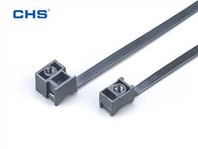
As a supplier of Holder Cable Ties, I've had the privilege of witnessing firsthand the diverse applications and requirements that different industries have for these essential tools. Cable ties, also known as zip ties, are ubiquitous in various fields, from electrical installations to automotive manufacturing, and even in DIY projects at home. But are there different types of Holder Cable Ties? The answer is a resounding yes, and in this blog, I'll delve into the various types, their features, and applications.

Nylon Cable Ties: The Workhorse of the Industry
Nylon is the most common material used for cable ties due to its excellent balance of strength, flexibility, and cost - effectiveness. Nylon cable ties can withstand a wide range of temperatures, from - 40°F to 185°F (- 40°C to 85°C), making them suitable for both indoor and outdoor applications.
Standard Nylon Cable Ties
Standard nylon cable ties are the most basic type. They have a simple ratchet mechanism that allows them to be tightened around cables or other objects and locked in place. Once tightened, they cannot be easily removed without cutting. These are ideal for permanent installations where there is no need to adjust the tie later. For example, in electrical panels, standard nylon cable ties are used to bundle wires together neatly, preventing them from becoming tangled and reducing the risk of short - circuits.
Saddle Mounting Cable Ties
Saddle mounting cable ties are designed with a unique saddle - shaped base that allows them to be easily mounted on flat surfaces such as walls, panels, or equipment frames. This type of cable tie is particularly useful when you need to secure cables in a specific location and keep them organized. For instance, in a data center, saddle mounting cable ties can be used to attach network cables to the server racks, ensuring that the cables are neatly arranged and easily accessible for maintenance.
Double Locking Cable Ties
Double locking cable ties provide an extra level of security. They have two locking mechanisms instead of one, which means they are much more difficult to accidentally loosen or break. These are often used in high - vibration environments, such as automotive engines or industrial machinery, where the integrity of the cable bundle is crucial. The double - locking feature ensures that the cables remain securely fastened even under extreme conditions.
Stainless Steel Cable Ties: For Harsh Environments
Stainless steel cable ties are designed for applications where corrosion resistance and high strength are required. They can withstand harsh chemicals, extreme temperatures, and high - stress situations.
Heavy - Duty Stainless Steel Cable Ties
Heavy - duty stainless steel cable ties are commonly used in the marine, oil, and gas industries. In the marine environment, where saltwater can cause rapid corrosion of other materials, stainless steel cable ties are the go - to choice for securing cables on boats, offshore platforms, and other marine equipment. They can also be found in industrial settings where they are used to bundle heavy - gauge cables or secure equipment in high - stress areas.
Releasable Cable Ties: For Flexibility
Releasable cable ties are designed for applications where you may need to adjust or remove the tie without cutting it. This makes them ideal for temporary installations or situations where you need to make changes to the cable bundle over time.

Releasable Push Mount Cable Tie
Releasable push mount cable ties combine the convenience of a releasable mechanism with the ability to be mounted on a surface. They are often used in office environments, for example, to organize computer cables under desks. If you need to add or remove a cable from the bundle, you can simply release the tie and make the necessary adjustments.
Specialty Cable Ties
In addition to the common types mentioned above, there are also specialty cable ties designed for specific applications.
Marking Cable Ties
Marking cable ties have a blank area where you can write or print information such as cable labels, identification numbers, or installation dates. These are useful in large - scale electrical or data installations where it is important to keep track of individual cables or cable bundles.
Fire - Retardant Cable Ties
Fire - retardant cable ties are made from materials that are resistant to ignition and flame spread. They are used in applications where fire safety is a concern, such as in building wiring, public transportation, and aerospace industries.
Choosing the Right Type of Holder Cable Tie
When selecting a cable tie for your application, several factors need to be considered:
Strength Requirements
Determine the amount of force the cable tie will need to withstand. For heavy - duty applications, such as securing large cables or equipment, a high - strength cable tie like a stainless steel or heavy - duty nylon tie may be required.
Environmental Conditions
Consider the temperature, humidity, and chemical exposure in the environment where the cable tie will be used. For outdoor or corrosive environments, a corrosion - resistant material like stainless steel or a UV - stabilized nylon may be necessary.

Installation and Adjustability
If you need to make adjustments to the cable bundle over time, a releasable cable tie is a better choice. For permanent installations, a standard or double - locking cable tie may be more appropriate.
Conclusion
In conclusion, there are indeed many different types of Holder Cable Ties, each designed to meet specific needs and applications. Whether you are in the electrical, automotive, marine, or any other industry, there is a cable tie that is perfect for your requirements. As a supplier, I am committed to providing high - quality cable ties that meet the diverse needs of our customers.
If you are interested in purchasing Holder Cable Ties for your project, I encourage you to reach out to us for a detailed discussion of your requirements. We can help you select the right type of cable tie and provide you with a competitive quote. Contact us today to start the procurement process and ensure that your cable management needs are met efficiently and effectively.
References
- "Cable Tie Handbook" - A comprehensive guide on cable tie types, materials, and applications.
- Industry standards and specifications for cable ties, such as those set by the International Electrotechnical Commission (IEC) and the American National Standards Institute (ANSI).