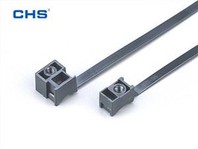
As a supplier of Magic Cable Ties, I've received numerous inquiries about whether these cable ties are easy to cut to the desired length. This question is not only relevant to users but also crucial for understanding the practicality of our products. In this blog, I'll delve into the factors that affect the ease of cutting Magic Cable Ties and provide some insights based on our experience in the industry.
Understanding Magic Cable Ties
Magic Cable Ties are a versatile fastening solution used in various industries, from electronics and automotive to home improvement and DIY projects. They come in different types, such as Round Head Cable Ties, Buckle Cable Ties, and Anti Skid Cable Ties, each designed to meet specific needs. These cable ties are typically made of high - quality nylon, which offers excellent strength, durability, and resistance to environmental factors.
Factors Affecting the Ease of Cutting
Material Composition
The material of the cable tie is a primary factor. Nylon, the most common material for Magic Cable Ties, has different grades. Higher - grade nylon may be more durable and resistant to wear and tear, but it can also be more difficult to cut. For example, a cable tie made of a tough, reinforced nylon may require more force to cut compared to a standard - grade nylon tie. However, the advantage of using a higher - grade nylon is that it can withstand harsher conditions and provide a more reliable fastening solution.
Thickness and Width
The thickness and width of the cable tie play a significant role in cutting ease. Thicker and wider cable ties generally offer greater strength but are also more challenging to cut. A thin, narrow cable tie can be easily snipped with a pair of regular scissors, while a thick, wide tie may require a more powerful cutting tool, such as a cable tie cutter or a sharp utility knife. For instance, a 1.5mm - thick cable tie is much easier to cut than a 3mm - thick one.
Cutting Tools
The choice of cutting tool is crucial. Using the wrong tool can make the cutting process difficult and may even damage the cable tie or the surrounding area. Here are some common cutting tools and their effectiveness:
- Scissors: Regular household scissors can be used for thin and small - sized cable ties. They are convenient and readily available. However, they may not be suitable for thicker or tougher cable ties, as the blades may not be sharp enough or strong enough to cut through the material cleanly.
- Cable Tie Cutters: These are specifically designed for cutting cable ties. They have sharp blades and a mechanism that provides leverage, making it easier to cut through thick and tough cable ties. Cable tie cutters are available in different sizes and styles, and they can ensure a clean and precise cut.
- Utility Knives: A sharp utility knife can also be used to cut cable ties. It offers more control than scissors and can be useful for cutting at odd angles. However, it requires more skill to use safely, as there is a risk of slipping and causing injury.
Tips for Cutting Magic Cable Ties
Select the Right Tool
Based on the thickness and material of the cable tie, choose the appropriate cutting tool. For thin cable ties, scissors may be sufficient. For thicker ones, opt for a cable tie cutter or a sharp utility knife. If you're dealing with a large number of cable ties, investing in a good - quality cable tie cutter can save you time and effort.
Mark the Desired Length
Before cutting, mark the exact length you need on the cable tie. This can be done using a pen or a marker. Marking the length ensures that you get a precise cut and helps you avoid cutting too short or too long.


Use Proper Technique
When using a cutting tool, apply steady pressure. For scissors or cable tie cutters, place the cable tie firmly between the blades and squeeze slowly but firmly. When using a utility knife, hold the knife at a proper angle and make a single, smooth cut. Avoid using excessive force, as it may cause the cable tie to break unevenly or damage the tool.
Real - World Applications
In real - world scenarios, the ease of cutting Magic Cable Ties is highly valued. In the electronics industry, technicians often need to quickly cut cable ties to organize wires and cables. The ability to cut the ties to the right length easily can improve work efficiency. In automotive repair, mechanics use cable ties to secure hoses and wires. A cable tie that is easy to cut allows them to make adjustments on the spot without wasting time struggling with cutting.
In home improvement projects, DIY enthusiasts appreciate the convenience of being able to cut cable ties to fit different applications. Whether it's securing a garden hose or organizing a toolbox, the ease of cutting Magic Cable Ties makes them a popular choice.
Our Product Advantage
As a supplier of Magic Cable Ties, we understand the importance of ease of cutting. Our products are designed to strike a balance between strength and cutability. We use high - quality nylon materials that are both durable and relatively easy to cut with common tools. Our manufacturing process ensures consistent thickness and quality across all our cable ties, which means that users can expect a similar cutting experience with each tie.
We also offer a wide range of cable tie types and sizes to meet different needs. Whether you need a thin and flexible tie for a delicate application or a thick and strong one for a heavy - duty project, we have the right product for you.
Conclusion
In conclusion, whether Magic Cable Ties are easy to cut to the desired length depends on several factors, including material composition, thickness, width, and the cutting tool used. By understanding these factors and following the right cutting tips, users can easily cut our cable ties to the required length.
If you're interested in purchasing our Magic Cable Ties, we'd love to have a conversation with you. Our products are of high quality and offer excellent value for money. Whether you're a large - scale industrial user or a DIY enthusiast, we can provide the right cable tie solution for your needs. Please reach out to us to start a procurement discussion.
References
- Smith, J. (2018). "Cable Tie Technology and Applications". Industrial Fastening Journal.
- Brown, A. (2019). "The Science of Nylon in Fasteners". Polymer Research Quarterly.