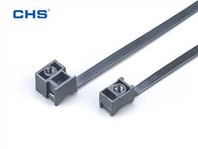
Are in line cable ties heat-resistant? That's a question I get asked a lot as a supplier of In Line Cable Ties. And it's a really important one, especially if you're using these ties in environments where they might be exposed to high temperatures.
First off, let's talk about what in line cable ties are. They're a type of cable tie that's designed to hold multiple cables together in a neat and organized way. You can use them in all sorts of applications, from home DIY projects to industrial settings. They're super handy because they allow you to manage cables efficiently, reducing the risk of tangles and making it easier to install and maintain your wiring systems.
Now, back to the heat resistance question. The heat resistance of in line cable ties depends on the material they're made from. Most in line cable ties are made from nylon. Nylon is a popular choice because it's strong, durable, and relatively inexpensive. But when it comes to heat, nylon has its limits.
Nylon cable ties typically have a maximum continuous operating temperature range. For standard nylon 6/6 cable ties, this range is usually around -40°F to 185°F (-40°C to 85°C). If the temperature goes above this range, the nylon starts to soften. When nylon softens, it loses its strength and its ability to hold the cables securely. So, in high - heat environments, you might find that your in line cable ties start to loosen up, and your cable management system becomes less reliable.
But don't worry, there are solutions. Some manufacturers, including us, offer heat - resistant versions of in line cable ties. These are made from special types of nylon or other heat - resistant polymers. For example, some heat - resistant nylon cable ties can withstand temperatures up to 250°F (121°C) or even higher. These ties are treated or formulated in a way that allows them to maintain their strength and integrity at elevated temperatures.
When you're choosing in line cable ties for a high - heat application, you need to consider a few things. First, figure out what the maximum temperature the ties will be exposed to. You can do this by using temperature sensors or by looking at the specifications of the equipment or environment where the ties will be used. Once you know the temperature range, you can select the appropriate heat - resistant cable ties.
Another factor to consider is the duration of the heat exposure. If it's a short - term spike in temperature, standard nylon cable ties might be okay. But if the ties will be exposed to high temperatures for long periods, you definitely want to go for the heat - resistant option.
Let's compare in line cable ties with other types of cable ties, like Releasable Nylon Cable Ties and Self Locking Nylon Cable Tie. Releasable nylon cable ties are great because you can reuse them. You can release the lock and adjust or remove the cables as needed. But in terms of heat resistance, they have the same limitations as standard in line cable ties made from nylon. They'll also start to lose their effectiveness if the temperature goes beyond the nylon's tolerance.
Self - locking nylon cable ties, on the other hand, are designed to provide a permanent hold. Once you cinch them tight, they're not easy to remove without cutting. Like the other nylon - based cable ties, their heat resistance is tied to the properties of nylon. So, if you're using them in a high - heat area, you'll face the same issues with softening and loss of strength.
In industrial applications, heat - resistant in line cable ties are a must. For example, in automotive engine compartments, the temperature can get really high. The engine generates a lot of heat, and the cable ties used to manage the wiring need to be able to withstand that heat. If the cable ties soften, the wires could come loose, which could lead to electrical problems or even safety hazards.
In the electronics industry, too, high - heat environments are common. Circuit boards can get hot, especially in high - performance computers or servers. In line cable ties used to organize the cables around these components need to be heat - resistant to ensure the reliability of the electrical connections.
In the aerospace industry, the requirements for heat - resistant cable ties are even more stringent. Aircraft systems operate in a wide range of temperatures, from the cold of high - altitude flight to the heat generated by on - board equipment. Cable ties used in these applications need to be able to perform consistently across this temperature spectrum.
So, as you can see, heat resistance is a crucial factor when it comes to in line cable ties. If you're unsure about which type of cable tie is right for your application, don't hesitate to reach out to us. We have a team of experts who can help you select the best cable ties based on your specific needs.
Whether you're a DIY enthusiast working on a home project or an engineer in a large - scale industrial setting, having the right cable ties is essential. Heat - resistant in line cable ties can save you a lot of headaches in the long run by ensuring that your cable management system stays reliable, even in high - heat environments.
If you're interested in purchasing heat - resistant in line cable ties or any other type of cable ties we offer, we'd love to have a chat with you. Just let us know about your requirements, and we can work together to find the perfect solution for your cable management needs.
References


- ASTM International standards for nylon materials
- Technical data sheets from cable tie manufacturers
- Industry research on cable management in high - heat environments