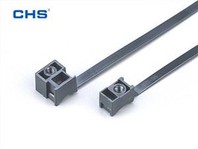
Beaded cable ties are a staple in various industries, known for their versatility and reliability in securing and organizing cables, wires, and other items. As a supplier of beaded cable ties, I often receive questions from customers about the corrosion resistance of these products. In this blog post, I will delve into the topic of whether beaded cable ties are resistant to corrosion, exploring the factors that influence their corrosion resistance and providing insights into how to ensure their long - term performance.
Understanding Corrosion
Corrosion is a natural process that occurs when a metal or other material reacts with its environment, leading to the deterioration of the material over time. In the case of beaded cable ties, corrosion can have a significant impact on their structural integrity and functionality. When a cable tie corrodes, it may lose its strength, become brittle, and eventually fail to hold the items it is securing. This can lead to safety hazards, equipment damage, and costly downtime.
Materials Used in Beaded Cable Ties
The corrosion resistance of beaded cable ties largely depends on the materials from which they are made. Most beaded cable ties are manufactured from nylon, a synthetic polymer known for its excellent mechanical properties and chemical resistance. Nylon is highly resistant to moisture, chemicals, and UV radiation, making it an ideal material for cable ties in a wide range of environments.
Nylon cable ties are typically made from nylon 6 or nylon 6/6. Nylon 6 is a semi - crystalline thermoplastic with good strength, stiffness, and abrasion resistance. It has a relatively high melting point and is resistant to many chemicals, including oils, greases, and solvents. Nylon 6/6, on the other hand, is a stronger and more rigid material than nylon 6. It has better heat resistance and is more resistant to wear and tear. Both nylon 6 and nylon 6/6 offer good corrosion resistance, especially when compared to metal - based cable ties.
Factors Affecting Corrosion Resistance
While nylon beaded cable ties are generally resistant to corrosion, several factors can affect their performance in corrosive environments:


- Exposure to Chemicals: Some chemicals can react with nylon and cause it to degrade over time. For example, strong acids and alkalis can break down the chemical bonds in nylon, leading to a loss of strength and flexibility. It is important to choose cable ties that are compatible with the chemicals they will be exposed to. In some cases, special coatings or additives can be used to enhance the chemical resistance of nylon cable ties.
- Moisture and Humidity: Although nylon is resistant to moisture, prolonged exposure to high levels of humidity or immersion in water can cause it to absorb moisture. This can lead to swelling, softening, and a reduction in the mechanical properties of the cable tie. In humid environments, it is advisable to use cable ties with a low moisture absorption rate or to apply a moisture - resistant coating.
- Temperature: Extreme temperatures can also affect the corrosion resistance of beaded cable ties. At high temperatures, nylon can become soft and lose its strength, while at low temperatures, it can become brittle and more prone to cracking. It is important to select cable ties that are suitable for the temperature range of the application.
Testing and Certification
To ensure the corrosion resistance of beaded cable ties, it is important to look for products that have been tested and certified by independent organizations. Many cable tie manufacturers conduct extensive testing to evaluate the performance of their products in various environmental conditions. These tests may include exposure to chemicals, moisture, and temperature cycling.
Certifications such as UL (Underwriters Laboratories) and RoHS (Restriction of Hazardous Substances) can provide assurance that the cable ties meet certain quality and safety standards. UL certification indicates that the cable ties have been tested for flammability, mechanical strength, and other properties, while RoHS certification ensures that the products are free from hazardous substances such as lead, mercury, and cadmium.
Applications and Environments
Beaded cable ties are used in a wide range of applications and environments, each with its own set of challenges. Here are some common applications and how corrosion resistance plays a role:
- Electrical and Electronics: In the electrical and electronics industry, beaded cable ties are used to secure wires and cables in control panels, circuit boards, and other equipment. These environments may be exposed to moisture, chemicals, and high temperatures. Using corrosion - resistant cable ties is essential to ensure the long - term reliability of the electrical systems.
- Automotive: In the automotive industry, cable ties are used to organize and secure wiring harnesses, hoses, and other components. Automotive environments can be harsh, with exposure to oil, grease, road salt, and extreme temperatures. Corrosion - resistant cable ties are necessary to prevent failures and ensure the safety and performance of the vehicles.
- Marine and Outdoor: In marine and outdoor applications, beaded cable ties are exposed to saltwater, humidity, and UV radiation. These conditions can accelerate the corrosion process. Using cable ties with high corrosion resistance and UV protection is crucial to ensure their durability in these environments.
Comparing with Other Types of Cable Ties
When considering corrosion resistance, it is also useful to compare beaded cable ties with other types of cable ties available in the market. For example, Plastic Security Seals Ties are often used in applications where security is a concern. They are typically made of plastic and offer good corrosion resistance, similar to beaded cable ties.
Mounted Head Cable Ties are designed for easy installation and are commonly used in industrial and electrical applications. They are also usually made of nylon and have good corrosion - resistant properties.
In Line Cable Ties are used for bundling multiple cables together. Like beaded cable ties, they are often made of nylon and offer resistance to corrosion in various environments.
Ensuring Long - Term Corrosion Resistance
To ensure the long - term corrosion resistance of beaded cable ties, here are some best practices:
- Proper Selection: Choose cable ties that are suitable for the specific application and environment. Consider factors such as chemical exposure, temperature range, and moisture levels.
- Installation: Follow the manufacturer's installation instructions carefully. Improper installation can cause stress on the cable ties, which may lead to premature failure.
- Regular Inspection: Periodically inspect the cable ties for signs of corrosion, damage, or wear. Replace any damaged or corroded cable ties immediately.
Conclusion
In conclusion, beaded cable ties made from nylon generally offer good corrosion resistance. However, their performance can be affected by factors such as chemical exposure, moisture, and temperature. By understanding these factors and taking appropriate measures to ensure proper selection, installation, and maintenance, you can maximize the corrosion resistance and longevity of beaded cable ties.
If you are in need of high - quality beaded cable ties with excellent corrosion resistance, we are here to help. Our team of experts can assist you in selecting the right products for your specific needs. Contact us to start a procurement discussion and find the best cable tie solutions for your applications.
References
- ASTM International. (2023). Standards related to plastics and polymers.
- UL Standards. (2023). Underwriters Laboratories standards for cable ties.
- RoHS Directive. (2023). European Union directive on the restriction of hazardous substances.